
OP ED: THE PRICE AT THE PUMP
Who can we blame for high prices at the gas pump? It’s a taxing way of life.
By John Grafman
Sun, Jan 4, 2026 05:00 AM PST
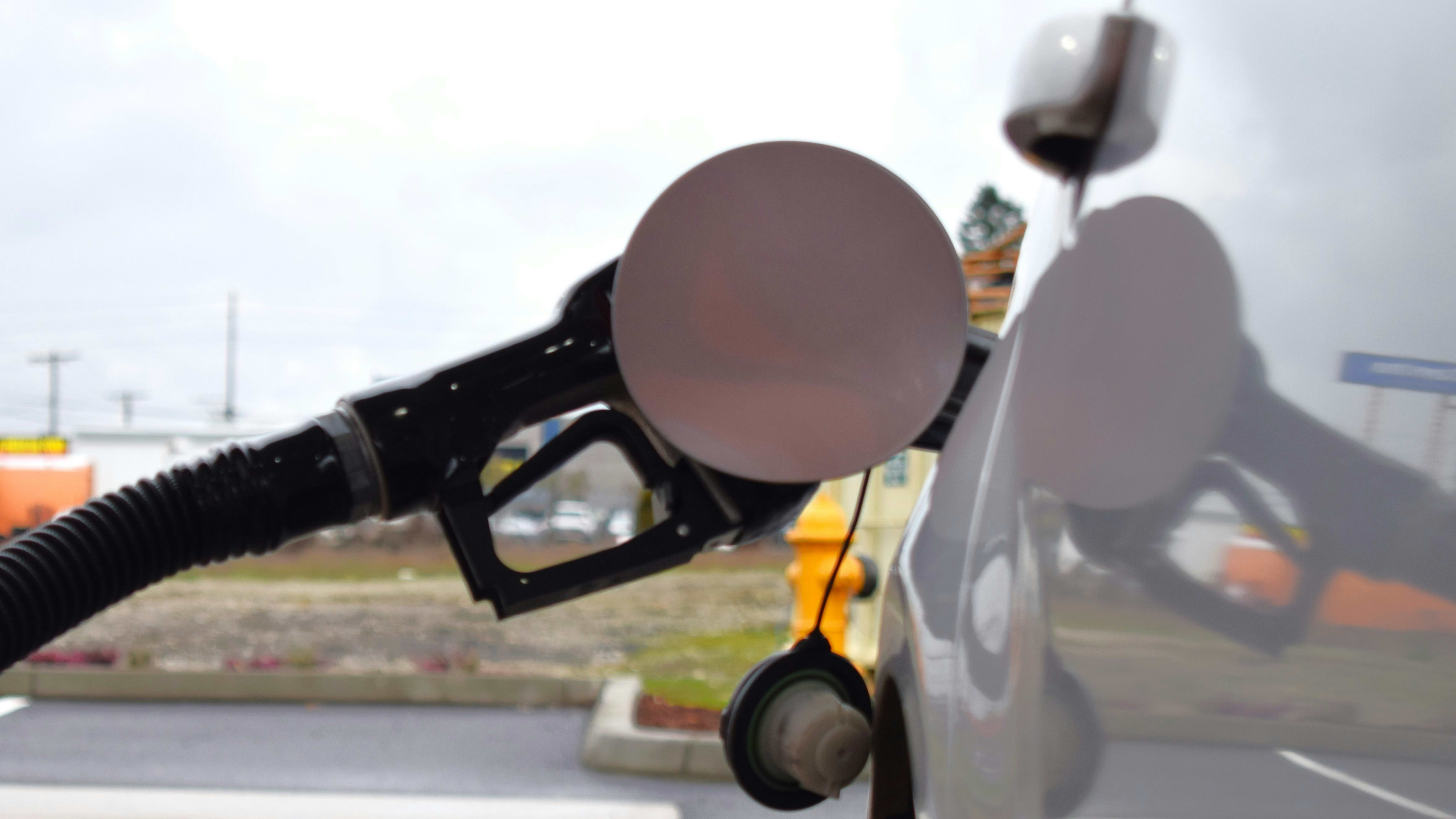
Featured image above: Gas Pump, by FrOggy5 (courtesy of Unsplash)
History has a nasty way of repeating itself.
Back in the 1970s, the air in Southern California was smog saturated, burning eyes, lungs, and staining our blue skies.

The switch to unleaded fuel was one of the major factors in eliminating the pollution and the negative health effects of it. The new equipment on cars, like catalytic convertors, required this new fuel formulation.
Indeed, the unleaded fuel cost more.
Initially, there was backlash. But at the end of the day, the public was less concerned about the price at the pump and more worried about the cost to their health and well-being.
The air pollution that's generated in densely populated cities, both now and then, are in concentrated levels that aren’t seen in open, less developed areas. For reference, Los Angeles County has a population that’s over 300 percent greater than the entire state of Nevada. Plus, the geography of the LA area with its inversion layer traps the air within it.
California is requiring refiners to comply with new regulations to further improve air quality.
This does come with a price tag for the oil companies to update and modernism their facilities.
The real question is, will this be passed along to consumers that are already feeling the pinch every time they refill the tank.
Are Taxes the Real Issue?
Research shows areas in California are offering gas as low as $3 a gallon or less, in contrast to those that are charging $4, 5 or 6 per gallon. They are subject to the same taxes in the state. So, are those station owners selling affordable gas at a loss? Highly unlikely, as hell hasn’t frozen over yet (see Gas Buddy's Best Gas Prices and Local Gas Sations in California).
Moreover, the sales tax rate has remained at 2.25 percent since July of 2010 and continues to hold steady until at least July of 2026.

Prior to the current rate of 2.25 percent, it was 8.25 percent when Governor Schwarzenegger was at the helm. The state excise tax in California has increased back in July of the past year from $0.59 to $0.61 a gallon, a slight $0.02 jump.
This was a legislatively mandated and a voter-approved gas tax increase. The excise tax has slowly and steadily increased since 2016, as has inflation.
This isn’t exactly the gloom and doom scenario that some have predicted with gas costing between $8-10 per gallon (see the California Department of Tax and Fee Administration's Sales Tax Rates for Fuels).
The Impact of Regulations
There is another factor: The Low Carbon Fuel Standard (LCFS) set by the California Air Resources Board (CARB), which requires the refineries to use cleaner energy to produce their products and more, or buy credits to offset this.
Albeit, the shutdown of a few non-compliant refineries will most likely have an impact on availability, and therefore the owners of gas stations might be inclined to profit off this.
How much of an impact will the LCFS have, if any, on a gallon of petrol has yet to be seen. However, this should reduce the pollution at refineries.
Those living in the adjacent areas will have less potential of health-related issues, like asthma. In a roundabout way, this will save on medical care, which can indirectly impact the wallets of everyone in the state (see the California Air Resources Board's Low Carbon Fuel Standard page).
California isn’t a bunch of pot-smoking hippies going it alone in reducing Green House Gases (GHG). The Pacific Coast Collaborative, a regional agreement with Oregon, Washington, and British Columbia, and California are strategically aligning GHG reductions and promoting clean energy alternatives.
Money, It’s A Gas*
When it comes to the pricing of fuel, the simple fact is we live in a capitalistic society and oil companies and gas stations can charge whatever they wish.
We can see this day-in and day-out as we drive around. It’s not unusual to see a wide disparity, sometimes in fueling stations just across the street from each other.
Plus, reducing gas taxes doesn't necessarily mean the prices will come down on a gallon. Even if there were no tax on gas, those setting the price know what their customers are willing to pay.
So, why reduce the price and thereby their profits? A free-market economy is a double-edge sword. Certainly, the last thing your neighborhood corner station wants is customers thinking that the station owner is part of the problem.
Additionally, local costs for land, labor, and more can influence the prices too, especially in cities like Los Angeles. Couple this with supply and demand.
We have known for decades that our supply is dwindling. This is why oil companies are now going to greater lengths and costs to extract oil, including squeezing it out of shale or fracking techniques.
We've already picked most of the low-hanging fruit, and it's going to continue to get more expensive in time.
Of course, we have also turned to foreign lands to supplement our local, natural resources.
There Will Be Blood
Limiting the oil exports does create an uptick in pricing. Natural disasters and political events, such as the war in Ukraine and the occupation of Venezuela, often means the global price per barrel will increase.
Will stopping the flow of oil on Venezuelan have consequences at the pump?

Taking control over the oil reserves in Venezuela, or any other country, does not necessarily mean gasoline will be cheaper, and could have the opposite effect.
Retail gas prices are traditionally a byproduct of several factors including global supplies and consequently the price per barrel, refining capacities, and the financial decisions of both the oil corporations and gas station owners.
If we truly want lower prices and stability at the pump, gasoline could be treated in the same manner as other utilities. But, until oil companies stop contributing to politicians, the odds are that type of legislation ever seeing the light of day are slim.
Little Victories
However, there is something we can do immediately as individuals to make a difference. Shopping for the least expensive fuel sends an unmistakable warning to the owners of gas stations.
It might not be as convenient on our part, but the competitors are forced to step up or lose business. Otherwise, it’s simply an open invitation for gas station owners to hike-up prices even further.
Yes, taxes are one part of the equation, but lowering those is not a silver bullet.
Ultimately, the revenue that gas tax generates would have to be made up elsewhere.
So, we'll still pay more, but on something else, and no doubt people will then complain about that.
And one more point
Other forms of energy will reduce our dependence on oil, and that too will influence the price per barrel over time via supply and demand.
But the political winds appear to be blowing against alternative means of power such as wind and solar at the moment. It all makes us more reliant on oil.
As we require electricity to run cars and computers, it would be wise to think about renewable sources. If not for ourselves, at least for future generations.
*In the words of Roger Waters of Pink Floyd fame.
P.S. - What do the politicians say? See ABC10's "Lawmakers warn refinery closures could drive California gas prices higher."
It is important to note in the video, neither of the politicians suggested having refineries in their districts. It's not so much an issue of obtaining the oil as it is processing it into gasoline. Of course, the standard line is - Not In My Backyard (NIMB). They are all in favor of the benefits of having more refineries open, but they don't want to absorb the health cost of their voting constituents. Go figure! - JG
About The Author

John Grafman spent far too much of his youth thriving on the canyons that connect the valley to Malibu. This antisocial behavior has evidentially scarred him for life. Nevertheless, using his powers for good rather than evil, John has spent the past dozen or so years working on models for numerous automotive design studios on the west coast. You’ve seen his work on the exterior and interiors of some of your favorite concept and production cars. You can now see his imprint throughout LA CAR.