What Every Los Angeles Driver Should Know Before and After a Car Accident
What do you know?
The combination of heavy traffic, complicated intersections, motorcycles filtering between lanes, some cyclists and pedestrians, means collisions are part of the reality of driving here.
By The Editors
Sat, Sep 26, 2026 08:31 PM PST
Featured image by Sebastian Enrique.
Driving in Los Angeles has its own rhythm. You learn which lane tends to move on the 405, when the 101 is likely to become a parking lot, and why a supposedly short trip across town can take an hour. For car enthusiasts, there is also something uniquely LA about sharing the road with everything from aging daily drivers to immaculate classics, modified imports, EVs, and the occasional exotic.
But the combination of heavy traffic, complicated intersections, motorcycles filtering between lanes, cyclists, pedestrians, and drivers trying to make up lost time also means collisions are part of the reality of driving here.
Knowing what to do before an accident happens can make the minutes — and days — afterward considerably less confusing.
Los Angeles Traffic Requires Extra Attention
Anyone who regularly drives the 405, 101 or I-10 knows congestion isn't limited to the traditional rush hour anymore. Traffic can go from moving normally to almost stationary with surprisingly little warning.
Freeways aren't the only concern.
Los Angeles' large surface streets bring their own risks. Wide boulevards can have several lanes of traffic, frequent driveways, complicated left turns and busy pedestrian crossings. LADOT's Vision Zero Safety Study has identified numerous priority locations and recurring collision patterns across the city. Among the locations highlighted for serious pedestrian collisions at crosswalks were Vermont Avenue at Wilshire Boulevard, Hollywood Boulevard at La Brea Avenue, and Broadway at Florence Avenue.
The practical lesson is simple: familiarity shouldn't become complacency. The intersection you drive through every morning can still produce an unexpected situation.
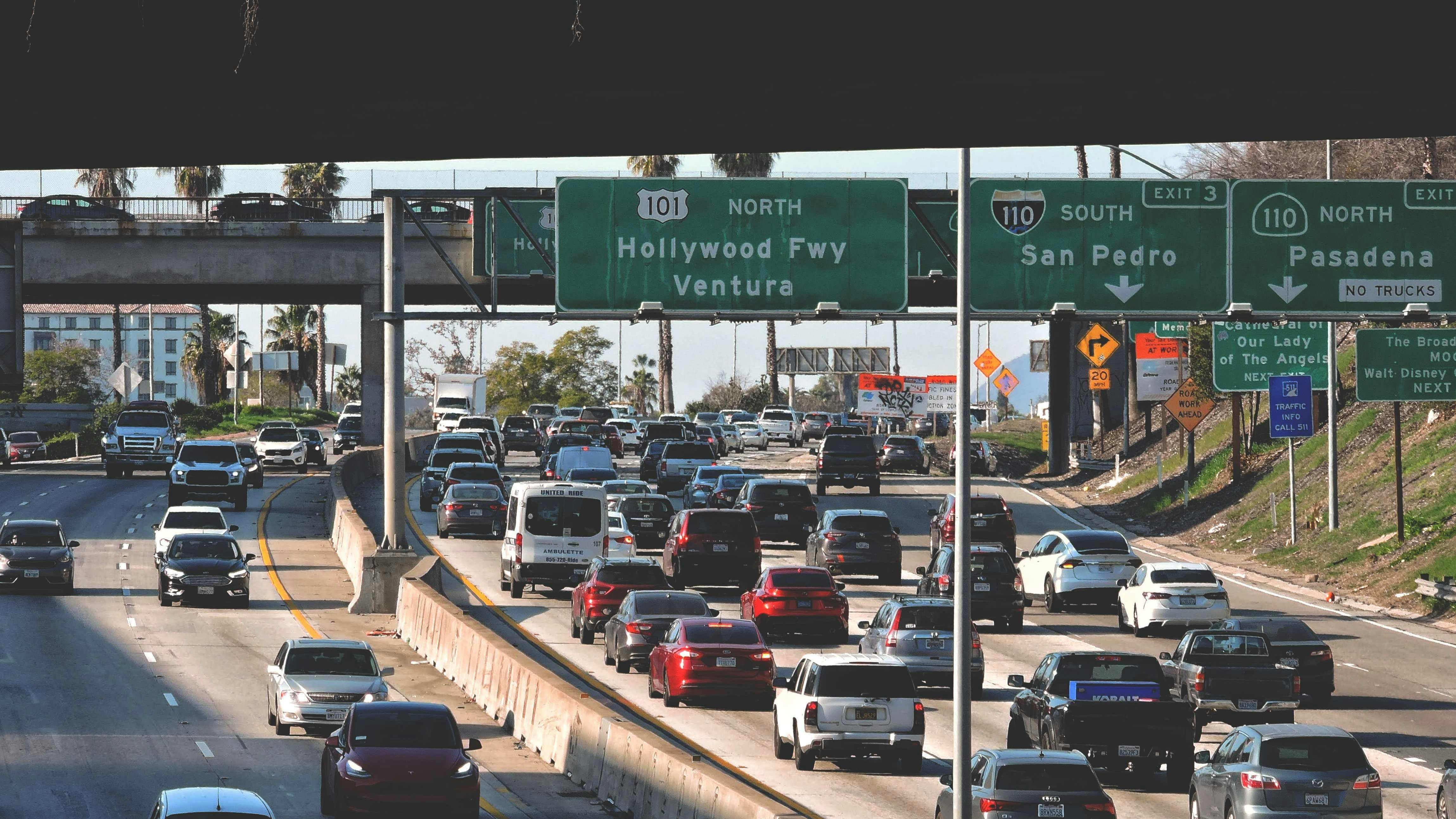
Caption: Heavy traffic and sudden changes in speed are an everyday part of driving in Los Angeles.
What to Do Immediately After a Collision
The first priority after any crash is safety.
If someone appears injured, call 911. If the vehicles can be moved safely and local conditions allow it, getting out of active traffic can reduce the possibility of a secondary collision. On a busy LA freeway, standing next to a damaged vehicle in a live traffic lane can be extremely dangerous.
Once you're somewhere reasonably safe, exchange the necessary information with the other driver. That includes names, driver's license details, license plate numbers, contact information and insurance information.
Then document the scene.
Most drivers already have the most useful tool in their pocket: a smartphone. Take photographs of both vehicles, including wide shots showing their positions and closer images of the damage. Photograph the roadway, traffic signals, signs, lane markings and anything else that could later help explain what happened.
If there are witnesses, ask for their contact details as well.
Avoid turning the roadside conversation into a debate about fault. Immediately after a collision, you may not have seen everything that contributed to it.
Hit-and-Run Crashes Are a Particular LA Concern
Hit-and-run collisions remain a visible problem in Los Angeles, with LAPD traffic divisions continuing to investigate serious and fatal cases around the city.
If the other vehicle leaves, resist the temptation to chase it.
Instead, remember or record as much information as possible: make and model, color, license plate or partial plate, direction of travel and distinguishing damage. Call law enforcement and check whether nearby businesses, homes or vehicles may have captured the collision on surveillance or dash cameras.
A dashcam is worth considering for anyone who spends significant time driving around Los Angeles. It cannot prevent an accident, but it can provide an objective record when accounts of what happened differ.
California's 10-Day DMV Rule
One requirement California drivers sometimes overlook happens after the immediate scene has cleared.
California DMV requires a driver involved in a collision to submit a Report of Traffic Accident Occurring in California, known as an SR-1, within 10 days when anyone was injured or killed, or when property damage exceeds $1,000.
The requirement applies regardless of who caused the collision.
Importantly, a police report or report to your insurance company does not replace the SR-1. DMV specifically treats it as a separate reporting obligation.
With modern repair costs, the $1,000 threshold can be reached surprisingly quickly. A bumper that appears only moderately damaged may hide broken sensors, cameras, mounting hardware or other components.
Don't Assume Fault Is Always All-or-Nothing
California follows a system of pure comparative negligence.
In practical terms, responsibility for a collision can be divided among the people involved rather than automatically assigned entirely to one driver. If an injured person is found partly responsible, that person's damages can be reduced according to their share of fault.
That matters in complicated LA crashes.
Imagine one driver making a questionable turn while another is traveling too fast for the circumstances. Determining responsibility may involve vehicle damage, witness statements, photographs, video footage and other evidence rather than one simple fact.
It is another reason documenting the scene carefully can matter.
Insurance, Medical Records and Legal Steps
Notify your insurer promptly and keep organized records of everything related to the collision. Save photographs, repair estimates, towing receipts, rental-car paperwork and communications concerning the claim.
If you're experiencing pain or other symptoms after the crash, don't dismiss them simply because the vehicles were traveling relatively slowly. Seek appropriate medical evaluation and keep records of treatment.
For accidents involving significant injuries or disputed responsibility, understanding the legal side before giving detailed statements or agreeing to a settlement can also be useful. Consulting with Los Angeles personal injury attorneys before speaking extensively with an insurance company can help a driver understand how California's liability rules and claim procedures apply to the circumstances.
California also places deadlines on civil claims. According to the California Courts, a personal-injury lawsuit generally must be filed within two years from the date of injury. Different deadlines can apply in certain circumstances, including claims involving government entities, so the two-year period shouldn't be treated as universal for every possible case.
Think About the Accident Before It Happens
Nobody leaves home expecting to crash on the 405 or get sideswiped while crossing an LA intersection. A little preparation, however, takes almost no effort.
Keep current insurance and registration information accessible. Make sure your phone has enough charge for a normal trip. Consider installing a dashcam, especially if you commute frequently. Know where your insurer's claim information is stored.
And if an accident does happen, concentrate on the basics: get somewhere safe, check for injuries, document what happened, exchange information and complete the required reports.
Los Angeles may be one of America's most demanding places to drive, but the steps following a collision don't have to be complicated. Knowing California's rules beforehand — particularly the SR-1 reporting requirement, comparative-negligence system and applicable legal deadlines — can make an already stressful situation much easier to manage.