The Perfect Fit: Optimal Tire Sizing

Tires - A Necessary Evil Or The Things That Keep You On The Road?
Do you ever wonder why tire sizing matters? Tire sizes are coded for your vehicle, which tells an important detail about your car. Every number and letter on the tire has its purpose, and it makes sure that the tire is right for the vehicle.
By The Editors
Fri, Dec 12, 2025 05:26 AM PST
Images courtesy of Priority Tire.
It has a huge impact on the vehicle’s safety, performance, fuel efficiency, tread life, and handling. Choosing the right tire size is crucial for maintaining optimal control and preserving the vehicle’s intended driving characteristics.
Decoding the Tire Sidewall
The tire sidewall provides important information about the tire. Decoding it can help to understand the code, such as 275/65R20 126/123S. Let’s discover what the numbers and letters mean and why they are so important.
The letter before the tire size indicates what type of vehicles the tires are for. Manufacturers mostly place the P, LT, C, and ST letters in front of the tire size. The P metric in our case represents that the tire is built for passenger cars, SUVs, and crossovers. The letter LT is for light trucks, C is for commercial vehicles, and ST is for special trailer tires.
The first number in the tire sizes represents the width size, which is measured from sidewall to sidewall, across the tire’s footprint in millimeters. The middle number in the tire size is called aspect ratio, which is the ratio of the height of the tire’s cross-section to its width, and it is shown in percentages. The last number is the rim diameter, which tells drivers the size of the rim they need for their specific tire.
The letter R that can be found between the second and third numbers is the construction, and it indicates that the tire has a radial construction. Different internal structures make the tires perform in a different manner.
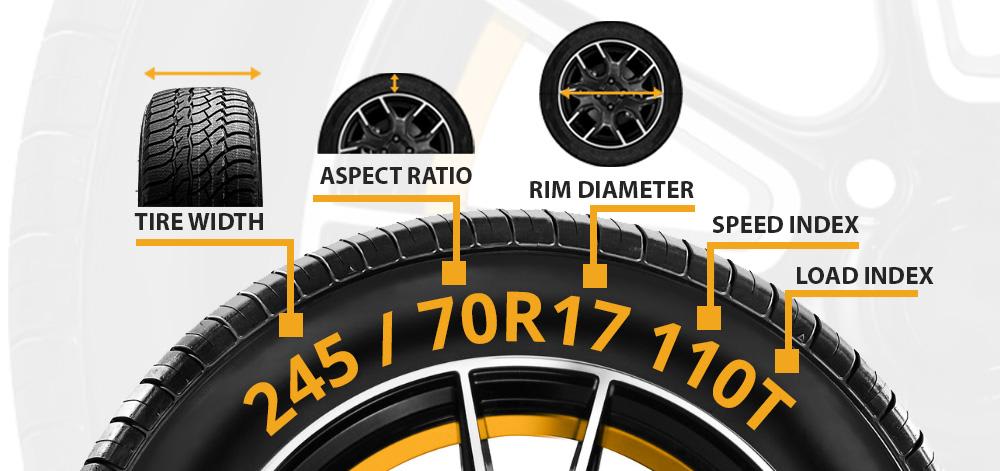
Also, don’t forget the load and speed ratings, which mostly appear after the tire size. The load index is the maximum load capacity of one tire, and it is a numerical scale that starts from 1 and goes up to 150. On the other hand, the speed rating is a letter situated after the load index, and it represents the maximum speed durability of each tire.
Finding Your Vehicle’s Sweet Spot
The vehicle’s sweet spot can be found using the factory-recommended maintenance and operating within certain parameters for optimal performance and longevity. This can guarantee that your car will operate as the manufacturer intended, maximizing efficiency and reliability. The only thing that you need to do is to follow your owner’s manual.
The factory-recommended specs are the perfect starting point because they can ensure the vehicle’s performance, efficiency, longevity, reliability, and safety. To find your vehicle’s sweet spot, you can consult your owner’s manual, which contains the recommended maintenance schedule, fluid types, and other crucial information about your vehicle. You can also use the VIN lookup tool, which provides a detailed list of your vehicle’s original factory specifications, including engine information and transmission. Also, you can monitor your driving habits by paying attention to your vehicle’s behavior at different speeds, or you can consider the average mileage.
Performance vs. Practicality: Striking the Right Balance
When selecting the right tires, it is important to consider your driving needs and conditions, because one tire size doesn’t fit all. If you are mainly driving in city traffic or you’re a weekend off-road adventurer, you will have different tires. The same applies, if you live in an area with harsh winters or in a sunny, warm climate. All these factors have an impact on your vehicle, so wisely choose your tire type.
Tires can be categorized by their intended use, based on the season and their performance capabilities:
By Season:
- All Season
- All Weather
- Summer
- Winter
By Performance:
- Performance
- High Performance
- Touring
- Off-Road (including All Terrain, Mud Terrain, Rugged Terrain, and Extreme Terrain)
The Importance of Proper Installation and Balancing
Proper installation and balancing are crucial for safety, longevity, and performance. They can also prevent dangerous vibration and handling issues while improving the tire’s service life and fuel efficiency.
Proper tire installation ensures safety, prevents tire blowouts, and also increases performance. Incorrectly installed tires can easily lead to accidents due to reduced traction, unpredictable handling, and increased stopping distance.
Balancing secures the vehicle’s smooth ride, lengthens the tire’s service life, reduces wear formations on other components, and guarantees a fuel-efficient performance. Balancing also provides an even distribution of weight, preventing vibrations that lead to a bumpy ride and reduced comfort. Unbalanced tires put extra stress on suspension and steering parts like bearings and shocks, which can lead to costly repairs down the line.
Some of the signs that your tires need balancing or installation check are excessive vibrations felt in the vehicle’s cabin, uneven tire wear, vehicle pulling to one side, and increased stopping distance.
Conclusion
Selecting the optimal tire size is crucial for achieving the perfect fit for your vehicle, as it significantly affects driving safety, performance, fuel efficiency, and tire longevity. To ensure the correct choice, you must learn to decode the information on the tire sidewall.
Beyond the sidewall codes, the vehicle's "sweet spots" and the essential details found in your owner's manual should also guide your selection. Additionally, the type of tire must align with both the season and the desired performance characteristics. Considering all these factors will markedly enhance both your driving performance and overall quality of driving.